How should I properly wear a mask during COVID-19?
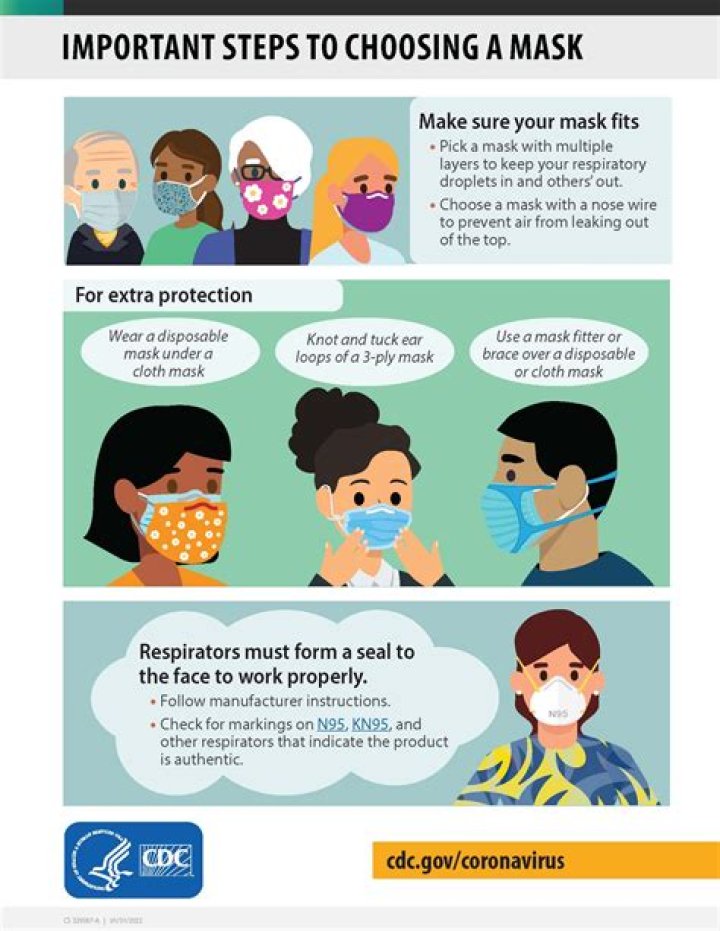
Here are the basics of how to wear a mask:• Clean your hands before you put your mask on, as well as before and after you take it off, and after you touch it at any time.• Make sure it covers both your nose, mouth and chin. • When you take off a mask, store it in a clean plastic bag, and every day either wash it if it’s a fabric mask, or dispose of a medical mask in a trash bin.• Don’t use masks with valves.
Are there face masks that should not be worn during the COVID-19 pandemic?
See full answerFace coverings limit the volume and travel distance of expiratory droplets dispersed when talking, breathing, and coughing. A face covering without vents or holes will also filter out particles containing the virus from inhaled and exhaled air, reducing the chances of infection. But, if the mask include an exhalation valve, a wearer that is infected (maybe without having noticed that, and asymptomatic) would transmit the virus outwards through it, despite any certification they can have.So the masks with exhalation valve are not for the infected wearers, and are not reliable to stop the pandemic in a large scale. Many countries and local jurisdictions encourage or mandate the use of face masks or cloth face coverings by members of the public to limit the spread of the virus.
When should masks be worn by the general public during the COVID-19 pandemic?
See full answerIn areas where the virus is circulating, masks should be worn when you’re in crowded settings, where you can’t be at least 1 metre from others, and in rooms with poor or unknown ventilation. It’s not always easy to determine the quality of ventilation, which depends on the rate of air change, recirculation and outdoor fresh air. So if you have any doubts, it’s safer to simply wear a mask.You should always clean your hands before and after using a mask, and before touching it while wearing it.While wearing a mask, you should still keep physical distance from others as much as possible. Wearing a mask does not mean you can have close contact with people.For indoor public settings such as busy shopping centres, religious buildings, restaurants, schools and public transport, you should wear a mask if you cannot maintain physical distance from others.
Who should wear a medical mask during the COVID-19 pandemic?
See full answerMedical masks are recommended for:• Health workers in clinical settings. See our guidance for more information on the use of personal protective equipment by health care workers.• Anyone who is feeling unwell, including people with mild symptoms, such as muscle aches, slight cough, sore throat or fatigue.• Anyone awaiting COVID-19 test results or who has tested positive.• People caring for someone who is a suspected or confirmed case of COVID-19 outside of health facilities.Medical masks are also recommended for the following groups, because they are at a higher risk of becoming seriously ill with COVID-19 and dying:• People aged 60 or over.• People of any age with underlying health conditions, including chronic respiratory disease, cardiovascular disease, cancer, obesity, immunocompromised patients and diabetes mellitus.
What layers should the fabric mask be made of during the COVID-19 pandemic?
Fabric masks should be made of three layers of fabric:• Inner layer of absorbent material, such as cotton.• Middle layer of non-woven non-absorbent material, such as polypropylene.• Outer layer of non-absorbent material, such as polyester or polyester blend.
How to correctly dispose of facemasks?
– remove the mask by using appropriate technique (i.e. do not touch the front but remove the lace from behind); – after removal or whenever you inadvertently touch a used mask, clean hands by using an alcohol-based hand rub or soap and water if visibly soiled- replace masks with a new clean, dry mask as soon as they become damp/humid; – do not re-use single-use masks; – discard single-use masks after each use and dispose of them immediately upon removal.
Does WHO recommend the use of masks with exhalation valves to prevent transmission of COVID-19?
No, WHO does not advise using masks or respirators with exhalation valves. These masks are intended for industrial workers to prevent dust and particles from being breathed in as the valve closes on inhale. However, the valve opens on exhale, making it easier to breathe but also allowing any virus to pass through the valve opening. This makes the mask ineffective at preventing the spread of COVID-19 or any other respiratory virus.
What is the recommended social distance to prevent the spread of COVID-19?
Maintain at least a 1-metre distance between yourself and others to reduce your risk of infection when they cough, sneeze or speak. Maintain an even greater distance between yourself and others when indoors. The further away, the better.
What are the materials for making masks for the coronavirus disease?
Fabric masks should be made of three layers of fabric:
- Inner layer of absorbent material, such as cotton.
- Middle layer of non-woven non-absorbent material, such as polypropylene.
- Outer layer of non-absorbent material, such as polyester or polyester blend.
What preventative measures can I take against the coronavirus disease?
To prevent infection and to slow transmission of COVID-19, do the following:
- Wash your hands regularly with soap and water, or clean them with alcohol-based hand rub.
- Maintain at least 1 metre distance between you and people coughing or sneezing.
- Avoid touching your face.
- Cover your mouth and nose when coughing or sneezing.
- Stay home if you feel unwell.
- Refrain from smoking and other activities that weaken the lungs.
- Practice physical distancing by avoiding unnecessary travel and staying away from large groups of people.
What should I do if I have symptoms of COVID-19?
Stay home and self-isolate even if you have minor symptoms such as cough, headache, mild fever, until you recover. Call your health care provider or hotline for advice. Have someone bring you supplies. If you need to leave your house or have someone near you, wear a medical mask to avoid infecting others.If you have a fever, cough and difficulty breathing, seek medical attention immediately. Call by telephone first, if you can and follow the directions of your local health authority.